
Jiu Jitsu gives you a place to put your stress down and pick your energy back up, one focused round at a time.
Life in Maplewood can feel like a constant open-tab browser: work demands, family logistics, commuting, screens, and that low-level hum of stress that never fully turns off. We see it every week when new students walk in with tight shoulders, scattered focus, and the kind of fatigue that sleep does not fix. Jiu Jitsu is one of the most practical ways we know to interrupt that cycle.
Our training gives you a structured, skill-based outlet that is both physical and mentally absorbing. You are not just “working out.” You are learning how to solve problems under pressure, breathe through intensity, and reset your nervous system through purposeful movement and community. Over time, that combination is what turns stress relief into something you can actually feel and sustain.
In this article, we will explain how Jiu Jitsu supports stress reduction and lasting energy, what training looks like in a real week, and how we coach beginners in Maplewood to build momentum without burning out.
Why stress sticks, and why grappling helps it move
Stress is not only a mood. It is also a physiological pattern: elevated cortisol, shallow breathing, muscle tension, and a brain that keeps scanning for the next problem. When that pattern repeats day after day, it can leave you feeling wired and tired at the same time.
Grappling is a powerful counterbalance because it asks your attention to do one thing at a time. In a live round, you cannot multitask. You have to feel your posture, manage distance, and make decisions in the moment. That forced presence is a form of active mindfulness, and it is one of the reasons people often leave class feeling mentally quieter.
Research and large practitioner surveys back up what we see on the mats. In one comprehensive study of adult Brazilian Jiu-Jitsu practitioners, 87.5 percent reported reduced anxiety, 96.9 percent reported improved mood, and 100 percent reported a sense of community. That community piece matters more than people expect, especially if your stress comes from carrying everything alone.
The stress relief mechanism: what’s happening in your body
Endorphins are real, but the structure is the secret
Yes, intense training releases endorphins, and that helps. But the deeper shift comes from structure. A good class has a rhythm: warm-up, technical practice, drilling, and controlled sparring. Your mind learns to associate that rhythm with safety, effort, and completion. You show up, you do the work, you finish. That is a small psychological win that stacks up.
We also coach you to breathe and pace yourself. Early on, most adults hold their breath during scrambles, tense their neck, and try to muscle everything. That is normal. Then you learn that relaxed technique works better, and that lesson follows you into daily life: less panic, more problem-solving.
Cortisol, tension, and the “let go” effect
Martial arts training is associated with reduced cortisol levels, which can ease the physical symptoms of chronic stress like tight muscles and persistent fatigue. On the mat, you get a safe place to experience pressure and then release it. You learn when to resist, when to reframe, and when to tap. That last part matters: tapping is not failure, it is information. Your nervous system gets practice at conceding a moment without spiraling.
The result is that many students notice their shoulders drop after class, their jaw unclenches, and their sleep improves. It is not magic. It is repetition, coaching, and a kind of tired that feels clean.
Lasting energy: why you feel better the next day, not just right after class
A lot of workouts give you a short spike and then a crash. Jiu Jitsu tends to build a different kind of energy because it develops efficiency. As your technique improves, you waste less movement. You stop fighting the wrong battles. You learn how to stay calm in uncomfortable positions and still think clearly.
That efficiency shows up as day-to-day stamina. You might notice you can carry groceries up the stairs without feeling winded, or you are less drained by a stressful meeting because your body recognizes intensity as something manageable. Over time, we often see improvements in resilience, self-control, confidence, and general life satisfaction among consistent practitioners.
There is also a social energy that comes from training with real people, in the same room, working toward a shared goal. When you feel part of a group, your baseline stress tends to soften. You are not just “getting in shape.” You are building a routine that supports you.
What a class feels like when you’re new (and a little nervous)
Walking in for the first time can feel like stepping into a foreign language. We get it. Our job is to make the experience clear and welcoming without watering it down.
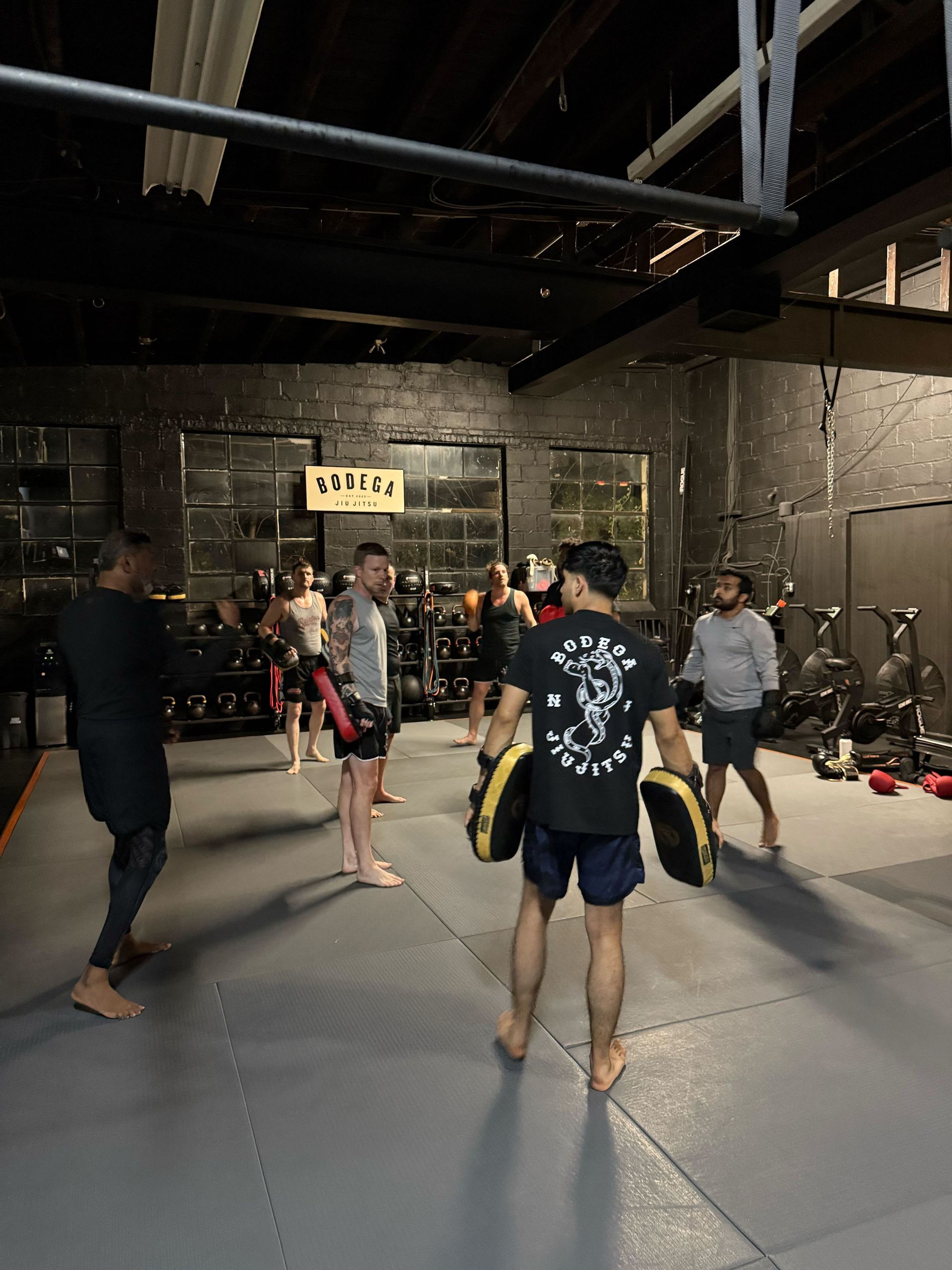
A typical class starts with movement prep that is appropriate for adults. You will get warm, but you will not be thrown into chaos. Then we teach a specific technique or concept, break it down into digestible steps, and give you time to practice. When sparring happens, it is controlled, and we help you choose intensity levels that fit your experience.
Expect a few beginner realities:
- You might feel clumsy at first, because your body is learning new coordination patterns.
- You will probably get tired faster than you expected, because grappling uses isometric strength and constant decision-making.
- You will also laugh at least once, usually when you realize how technical and surprising the positions can be.
If your goal is adult grappling in Maplewood that supports your health, your schedule, and your brain, the early weeks are about consistency, not perfection.
Skill-based training: the overlooked reason stress drops
Many adults are stressed because life feels like an endless list of tasks that never resolves. Skill-based training gives you a different feedback loop. You can measure progress in a concrete way: your posture is stronger, your escapes work more often, your breathing stays steady in positions that used to spike your heart rate.
That sense of progress is motivating, but it is also calming. Your brain likes closure, and technique development provides it. You practice something, you test it, you adjust, you repeat. It is a simple pattern, and it steadies you.
This is also where grappling arts Maplewood becomes more than a phrase. Grappling is not just “rolling.” It is a craft. When you treat it like a craft, your stress relief becomes sustainable because it is attached to learning.
How we keep training safe while still challenging
Tapping, communication, and good training partners
Safety is not an accident. It is a culture and a set of habits. We teach you to tap early, to communicate clearly, and to respect the pace of the room. We also emphasize controlled rounds, especially for beginners. You can train hard without turning every round into a test of ego.
We coach you to focus on position before submission and to prioritize alignment, base, and balance. Those fundamentals reduce injury risk and improve your energy management. If you have old injuries or limitations, we can help you scale. Most adults have something: a cranky shoulder, a stiff back, a knee that complains on rainy days. Training can still work, as long as it is smart.
Intensity that matches your life
Some weeks you will feel strong. Other weeks you will show up tired from work and still want to move. We build an environment where both can fit. Jiu Jitsu should support your life, not consume it.
If your goal is stress relief and lasting energy, the best intensity is the one you can repeat. Consistency beats occasional extremes.
A simple weekly plan for real adults in Maplewood
You do not need to train every day to feel the benefits. In fact, many people do better with a steady plan they can maintain.
Here is a practical approach we often recommend for new students:
1. Start with 2 classes per week for the first month to build comfort and recovery.
2. Add a third class if your sleep and soreness feel manageable, not overwhelming.
3. Keep one day between harder sessions when possible, especially early on.
4. Hydrate and eat like you mean it after training, because recovery is part of the program.
5. Track your energy and mood for two weeks, not two days, before you judge progress.
This kind of plan supports adult grappling in Maplewood without turning training into another stressor.
The mindset shift: from “I’m exhausted” to “I’m capable”
One of the most underrated benefits of Jiu Jitsu is how it changes your internal dialogue. When you learn to escape bad positions, you stop catastrophizing discomfort. When you learn to breathe under pressure, you stop treating every challenge like an emergency. When you train with partners and see your own improvement, confidence grows in a grounded way.
Studies also show clinically meaningful improvements in markers related to PTSD, anxiety, depression, and alcohol use among practitioners. We are not presenting training as a replacement for professional care when you need it, but we are honest about what we see: consistent training often strengthens the mental habits that support better decisions.
And there is something else, simple but powerful: you finish class. You did a hard thing. You kept going. That experience tends to spill into the rest of your week.
Get Started
If you want stress relief that is more than a quick break and energy that lasts beyond the post-workout buzz, our Jiu Jitsu classes in Maplewood are built to give you both: real skill development, smart intensity, and a room full of people working toward progress together. You will learn how to move with purpose, think under pressure, and leave training feeling lighter, not depleted.
When you are ready to see what that feels like in person, we will guide you step by step. At Bodega Jiu Jitsu, we keep the process straightforward for beginners while still offering a path that stays challenging as you grow.
Move from reading about grappling to practicing it at Bodega Jiu Jitsu.